Want to improve your chess skills and win more games? These 15 Powerful Chess Strategies Every Player Needs will help you think ahead, control the board, and make smarter moves. Improve your skills with 15 Powerful Chess Strategies Every Player Needs. Whether you’re a beginner or an experienced player, these proven strategies can strengthen your gameplay and boost your confidence in every match. This blog is covered by zainblogs.
The Complete Guide to Smarter Chess Play
Chess rewards players who think ahead and that’s exactly why we built this guide on the 15 Powerful Chess Strategies Every Player Needs. Whether you’re a beginner still memorizing how pieces move or an intermediate player stuck at the same rating for months, the strategies below cover every phase of the game: opening, middlegame, and endgame. You’ll learn how to control the center, keep your king safe, spot tactics like forks and pins, and turn small advantages into full points on the scoreboard.
Each strategy here is explained in plain language with a practical example you can try in your very next game. By the end, you’ll have a complete toolkit of chess strategy tips that strong players use almost automatically and you’ll understand exactly why each one works, not just what to do. 15 Powerful Chess Strategies Every Player Needs to win more games. Learn the official rules of chess and improve your understanding with the FIDE Laws of Chess.
Why Every Chess Player Needs a Strategic Framework
Tactics and strategy are not the same thing. Tactics are short combinations that win material or deliver checkmate right now. Strategy is the long-term plan that puts you in a position to find those tactics in the first place. That’s the whole idea behind the 15 Powerful Chess Strategies Every Player Needs a repeatable framework you can lean on in any game, against any opponent, at any level.
Below, the 15 strategies are grouped by phase of the game so you can study them in order or jump straight to the section you’re struggling with most. Master the board using 15 Powerful Chess Strategies Every Player Needs.
Opening Strategies: Building a Strong Foundation
The opening only lasts 10-15 moves, but mistakes here can haunt you for the rest of the game. These five opening principles are the backbone of every strong start.
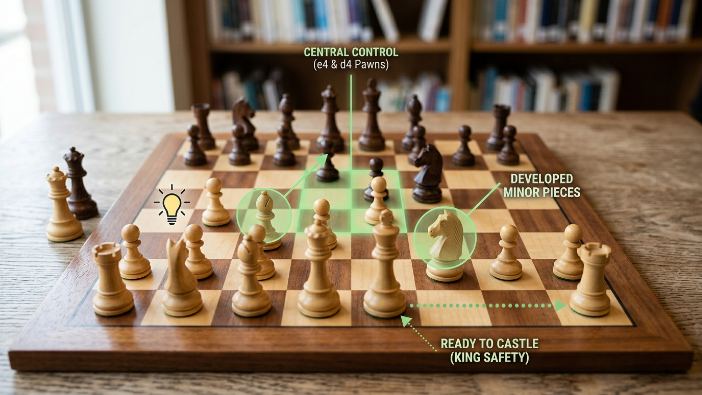
1. Control the Center Early
The four center squares (d4, d5, e4, e5) give your pieces the most mobility and influence over the whole board. Opening with a center pawn move like 1.e4 or 1.d4 and following up with piece development toward the center is one of the most powerful chess strategies every player needs to internalize before anything else. Learn smarter tactics with 15 Powerful Chess Strategies Every Player Needs.
2. Develop Every Piece With a Plan
Bring your knights and bishops off their starting squares before moving the same piece twice or hunting for an early attack. A well-developed position gives you more options in the middlegame and makes it much harder for your opponent to create threats against you. 15 Powerful Chess Strategies Every Player Needs for every skill level.
3. Castle Early to Protect Your King
A king stuck in the center is a constant liability. Aim to castle within the first 10 moves whenever possible. This single habit prevents more early losses than almost any other opening decision, and it’s a recurring theme across nearly every credible chess strategy guide. Boost your gameplay through 15 Powerful Chess Strategies Every Player Needs.
4. Avoid Moving the Same Piece Twice
Every extra move you spend re-positioning one piece is a move your opponent gets to develop two. Unless you’re responding to a direct threat, resist the urge to reroute a piece in the opening finish development first. Win with confidence using 15 Powerful Chess Strategies Every Player Needs.
5. Recognize Early Traps Like Scholar’s Mate
Beginners lose countless games to the four-move Scholar’s Mate (queen and bishop teaming up against f7/f2). Learn to recognize the setup, defend the weak f-file square, and you’ll immediately jump ahead of most players at your level. Discover proven tactics in 15 Powerful Chess Strategies Every Player Needs.
Chess opening board setup showing center control and early development
Middlegame Tactics: Spotting Winning Combinations
Once development is complete, the middlegame is where games are usually decided. These tactical patterns show up constantly, and training your eye to spot them is one of the fastest ways to improve.
6. Think in Material Value, Not Just Piece Count
Queen = 9, Rook = 5, Bishop/Knight = 3, Pawn = 1. Before any trade, add up both sides. Two rooks and a knight (13 points) are usually stronger than a queen alone (9 points) a detail many intermediate players still overlook. Build stronger attacks with 15 Powerful Chess Strategies Every Player Needs.
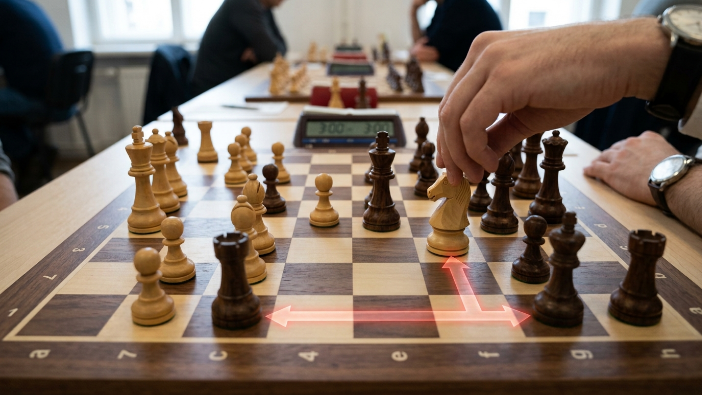
7. Hunt for Pins, Forks, and Skewers
A pin immobilizes a piece because moving it would expose something more valuable behind it. A fork is a single piece attacking two targets at once. A skewer forces a valuable piece to move, exposing a weaker one behind it. Scanning for these three patterns every single move is a habit every serious player should build. Think ahead with 15 Powerful Chess Strategies Every Player Needs.
8. Use Discovered Attacks to Create Double Threats
Moving one piece out of the way to reveal an attack from another piece behind it a discovered attack is one of the most damaging tactics in chess because the moving piece can create a second threat at the same time. 15 Powerful Chess Strategies Every Player Needs to outplay opponents.
9. Don’t Overlook Hanging Pieces
Before you play any move, ask: is anything of mine currently undefended? Missing a hanging piece is, by a wide margin, the single most common way beginners lose material. Improve every move with 15 Powerful Chess Strategies Every Player Needs.
Diagram illustrating a knight fork attacking a king and queen simultaneously
Middlegame Strategy: Positional Play That Wins Games
Not every advantage comes from a tactic. These positional ideas build long-term pressure that eventually turns into a winning tactic or endgame.
10. Improve Your Worst-Placed Piece First
When you’re not sure what to play, look at your position and ask which piece is doing the least. Improving that piece almost always strengthens your whole position more than a move that only helps a piece that was already active. Become a better player through 15 Powerful Chess Strategies Every Player Needs.
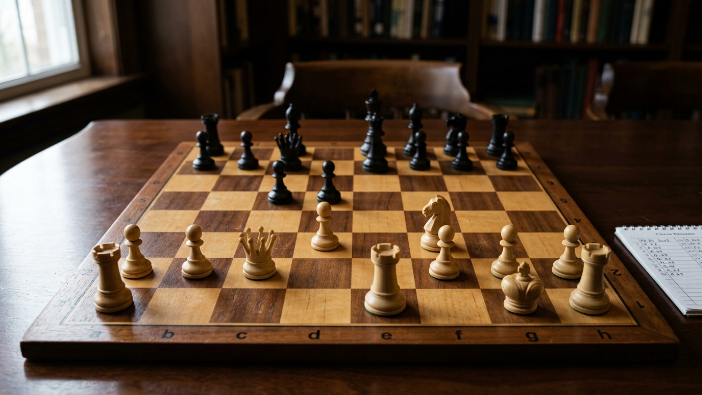
11. Control Open Files and Diagonals
Rooks belong on open or semi-open files, and bishops thrive on long, unobstructed diagonals. Placing your long-range pieces on these lines early gives them influence over the entire board for the rest of the game. Learn winning techniques with 15 Powerful Chess Strategies Every Player Needs.
12. Create and Exploit Pawn Weaknesses
Isolated, doubled, and backward pawns are permanent targets that can’t run away. Provoking these weaknesses in your opponent’s structure and steering the game toward an endgame where you can attack them is one of the more advanced but genuinely powerful chess strategies every intermediate player should practice. 15 Powerful Chess Strategies Every Player Needs for consistent victories.
Middlegame position showing a rook controlling an open file
Endgame Strategies: Converting Your Advantage
Many well-played games are thrown away in the endgame. These two ideas help you close out a win or save a draw once material is reduced.
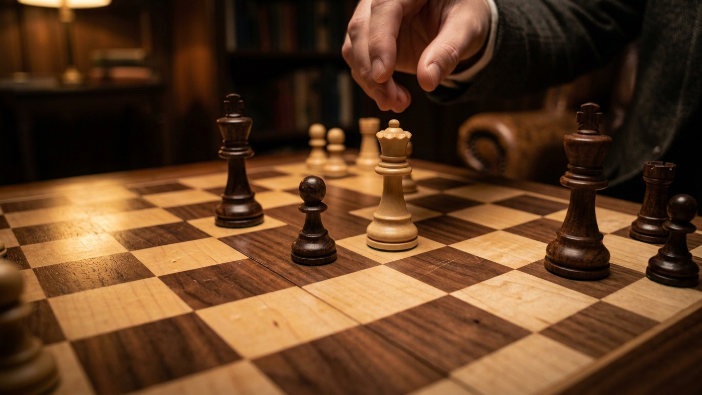
13. Activate Your King in the Endgame
With fewer pieces on the board, checkmate threats fade and the king becomes a strong attacking piece. Bringing your king toward the center in the endgame, rather than leaving it tucked away, is essential for winning pawn and rook endings. Sharpen your chess mindset with 15 Powerful Chess Strategies Every Player Needs.
14. Simplify When You’re Ahead in Material
If you already have a material edge, trading pieces (not pawns) reduces your opponent’s counterplay and makes your advantage easier to convert. Avoiding unnecessary complications is often the safest path to victory. Develop smarter plans using 15 Powerful Chess Strategies Every Player Needs.
King and pawn endgame diagram demonstrating king activity
Bonus Strategy: Building Long-Term Chess Improvement
15. Calculate Before You Move, Then Review Every Game
Before playing any candidate move, calculate at least two to three moves ahead and check your opponent’s best replies. After the game ends win or lose review it with an engine or a stronger player to find the exact moment your plan succeeded or broke down. This single habit, repeated consistently, is what turns knowledge of these 15 powerful chess strategies into real rating points. 15 Powerful Chess Strategies Every Player Needs to master every game.
Player analyzing a chess game on a laptop with a physical board beside them
Quick Reference: The 15 Powerful Chess Strategies Every Player Needs
#
Strategy
Game Phase
1
Control the center early
Opening
2
Develop every piece with a plan
Opening
3
Castle early
Opening
4
Avoid moving the same piece twice
Opening
5
Recognize early traps (Scholar’s Mate)
Opening
6
Think in material value
Middlegame Tactics
7
Hunt pins, forks, skewers
Middlegame Tactics
8
Use discovered attacks
Middlegame Tactics
9
Watch for hanging pieces
Middlegame Tactics
10
Improve your worst piece
Middlegame Positional
11
Control open files/diagonals
Middlegame Positional
12
Exploit pawn weaknesses
Middlegame Positional
13
Activate your king
Endgame
14
Simplify when ahead
Endgame
15
Calculate, then review your games
All phases
Common Mistakes That Undo Good Strategy
Chasing checkmate too early instead of finishing development.
Trading your active pieces for your opponent’s passive ones.
Ignoring pawn structure until it’s already ruined.
Playing fast in the middlegame and slow in a losing endgame it should be the reverse.
Never reviewing losses, so the same mistake repeats game after game.
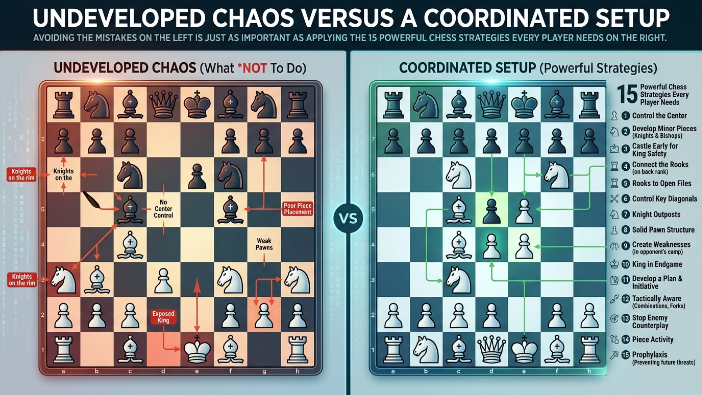
Split image comparing a cluttered undeveloped position vs a clean, well-developed position
Frequently Asked Questions
What are the 15 Powerful Chess Strategies Every Player Needs?
They are 15 principles spanning the opening (center control, development, castling), middlegame tactics (pins, forks, discovered attacks), positional play (open files, pawn weaknesses), and the endgame (king activity, simplification), plus a habit of calculating and reviewing every game.
What is the single most important chess strategy for beginners?
Controlling the center and castling early. These two habits prevent the majority of losses at the beginner level and set up everything else on this list.
How long does it take to learn basic chess strategy?
Most players can learn the core opening and tactical principles in a few weeks of regular practice, though applying them consistently under pressure takes months of playing and reviewing real games.
Is chess strategy more important than tactics?
They work together. Strategy positions your pieces so tactics become available; tactics convert that positioning into material or checkmate. Neither one works well without the other.
What’s the difference between a chess strategy and a chess tactic?
A strategy is a long-term plan, such as controlling the center or targeting a weak pawn. A tactic is a short, forcing sequence like a fork or pin that wins material or the game outright, usually within a few moves.
How do I stop blundering pieces in the middlegame?
Before every move, scan the board for any undefended piece yours or your opponent’s. This single check eliminates most blunders and is one of the easiest chess strategy tips to build into a habit.
Which chess opening is best for beginners who want to apply these strategies?
Openings built around fast development and quick castling, such as the Italian Game or the London System, make it easiest to apply center control and king safety without memorizing long theoretical lines.
Do these strategies work for online blitz and rapid games, not just classical chess?
Yes. The principles behind the 15 Powerful Chess Strategies Every Player Needs apply at every time control faster games simply reward players who can recognize these patterns more quickly.
Final Thoughts: Put These 15 Powerful Chess Strategies Every Player Needs Into Practice
Reading about strategy is only the first step the real improvement happens when you apply these ideas in your own games and review the results honestly. Start with the opening principles, layer in the tactical patterns, and gradually build the positional and endgame skills as your games last longer. Strengthen your opening play with 15 Powerful Chess Strategies Every Player Needs. Improve your endgame using 15 Powerful Chess Strategies Every Player Needs.
If this guide helped, share it with a friend who’s working on their own chess strategy, drop a comment with the tactic you find hardest to spot over the board, and check out our related guides on opening theory and tactical patterns below. Subscribe for more practical chess improvement tips like this one. Explore official chess regulations, resources, and educational materials on the FIDE Handbook.