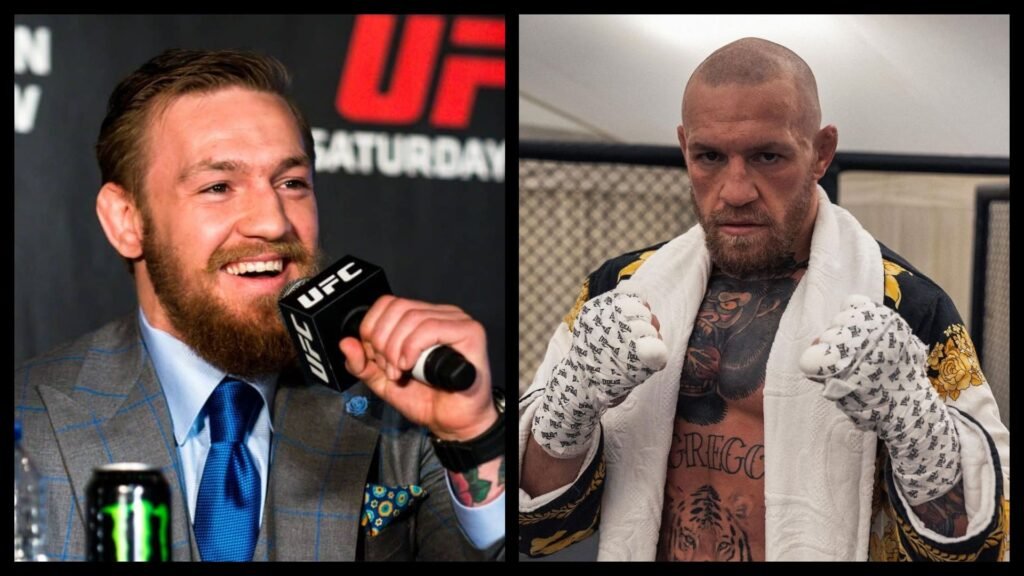
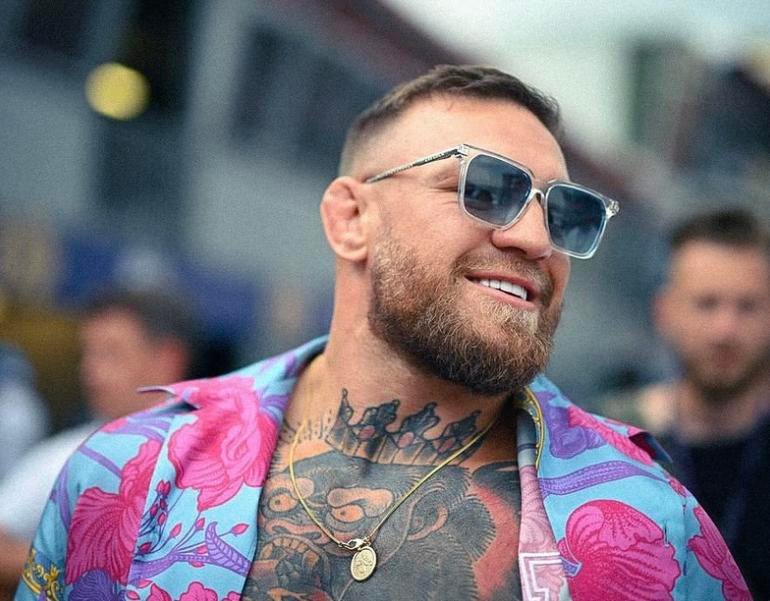
There are athletes, and then there is Conor McGregor. From the working-class streets of Crumlin in Dublin to sold-out arenas around the world, his story feels more like a movie script than real life. He talks louder than almost anyone in sports, and more often than not, he backs it all up inside the octagon. This blog is covered by zainblogs. Whether you love him or you simply cannot look away, one thing is certain the world of combat sports has never seen anyone quite like him. This article dives deep into the man, the fighter, the businessman, and the phenomenon.
From Crumlin to the Top: The Early Life of Conor McGregor
7 Remarkable Facts About Conor McGregor That Prove He’s Unlike Any Fighter Alive
Conor McGregor was born on July 14, 1988, in Dublin, Ireland. Growing up in Crumlin, he was not exactly handed a silver spoon. The neighborhood was rough, and plenty of kids his age found themselves on the wrong side of life. But young Conor had an early passion for sport football first, then boxing. At 12, he walked into a local boxing gym and something clicked immediately. The discipline, the competition, the thrill of it all he was hooked from day one.
By his late teens, McGregor was training seriously and had started his plumbing apprenticeship to keep money coming in. He actually met future UFC fighter Tom Egan through that apprenticeship, and the two started training MMA together. That chance encounter turned out to be one of the most important moments in combat sports history. McGregor was collecting around €188 per week in government welfare while training twice a day, scraping together enough to keep his dream alive. He later named his superyacht “The 188” as a tribute to that chapter a quiet reminder of where he came from.
His amateur MMA debut came at 18, and he won by first-round TKO. That result gave him the confidence he needed to pursue professional competition. By 2008 he was fighting professionally, and despite an early loss that nearly ended his career, his coach pushed him to stay the course. It is almost impossible to imagine the MMA world without Conor McGregor, but it was a very close thing. His determination in those lean years set the tone for everything that came after.
The Rise Through the UFC: Career Highlights That Changed MMA Forever
When Conor McGregor signed with the UFC in February 2013, he was just another prospect. That perception did not last long. His debut against Marcus Brimage on April 6, 2013, ended in a TKO just over a minute into the first round, and he earned a Knockout of the Night bonus on the spot. From that moment forward, people started paying attention. He had something different precision, timing, and an almost eerie calm under pressure that older and more experienced fighters simply did not expect.
The moment that truly launched McGregor into the stratosphere came on December 12, 2015, at UFC 194. Facing featherweight champion José Aldo who had been unbeaten for over a decade and widely regarded as the greatest featherweight in history McGregor knocked him out in just 13 seconds. That punch remains the fastest finish in a UFC title fight ever recorded. The whole world watched in disbelief. That single left hand rewrote the narrative of an entire era. Even Aldo himself admitted he never saw it coming.
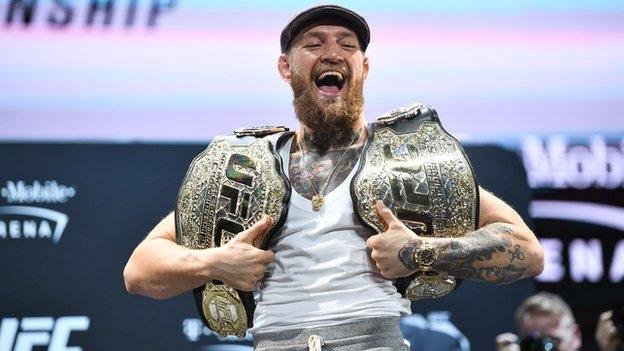
Then, in November 2016, Conor McGregor made history again at UFC 205 by stopping Eddie Alvarez for the lightweight title. In doing so, he became the first fighter in UFC history to hold two titles simultaneously. The Madison Square Garden crowd went absolutely wild. He had climbed two weight classes, dismantled champions in both, and done it with a style and confidence that nobody in MMA had ever matched. Say what you want about the man, but those achievements are permanent. No one can take them away.
The Fighting Style That Makes Conor McGregor So Dangerous
One of the most interesting things about Conor McGregor as a fighter is how he actually fights. He is primarily a southpaw meaning he leads with his right hand and throws the big left but he switches stances fluidly, which keeps opponents completely off-balance. His wide stance and upright posture look unusual compared to most MMA fighters, but they serve a specific purpose. They let him generate incredible power through his hips and shoulders on that left-handed counter, which has ended fights in an instant more times than once.
7 Remarkable Facts About Conor McGregor That Prove He’s Unlike Any Fighter Alive
McGregor’s boxing is widely considered the best in MMA history by many analysts. His ability to read distance, time his counters, and land with pinpoint accuracy at range is exceptional. He is not the biggest fighter at any weight class he has competed in, but that does not matter when your timing is that precise. His pull-back counter drawing an opponent’s strike, leaning back slightly, and exploding back with his left hand is the move that has put so many opponents on the canvas. It looks simple on screen, but it requires extraordinary spatial awareness and nerve.
His mental approach to fighting is just as important as his physical skills. Conor McGregor has talked openly about visualization and the power of positive thinking in shaping outcomes. He famously described his championship moment with José Aldo years before it actually happened, down to the knockout. Whether you believe in that kind of mindset work or not, his ability to remain composed and execute under enormous pressure is genuinely elite. The big moments never seemed to shrink him if anything, they made him sharper.
The Biggest Fights and the Losses That Defined His Legacy
No honest conversation about Conor McGregor is complete without talking about his losses and there have been some significant ones. His rivalry with Nate Diaz produced one of the most entertaining storylines in UFC history. McGregor lost the first fight in 2016 via submission, stepped up a weight class at very short notice, and then delivered a brilliant tactical performance to win the rematch. That back-and-forth told a real story about resilience and adaptation. Those two fights together are among the most watched in UFC history.
Then there was October 2018 and the fight with Khabib Nurmagomedov at UFC 229. That event drew over 2.4 million pay-per-view buys in the United States alone a UFC record at the time. McGregor lost by fourth-round submission, and what followed in the post-fight brawl between the two teams became one of the most controversial moments in MMA history. The lead-up to that fight, including a bus attack incident, added enormous drama. The fight itself was compelling, but McGregor met a style he truly struggled with Khabib’s relentless grappling and pressure were simply too much on that night.
His trilogy with Dustin Poirier added another chapter. McGregor won the first fight back in 2014 by TKO, but lost the second and third encounters. The third meeting at UFC 264 in July 2021 ended in heartbreaking fashion when McGregor fractured his leg at the end of the first round. It was an awful sight, and the fight was stopped immediately. That injury put him on the sidelines for years. Even in defeat, though, McGregor has always been must-watch television and that is not something most fighters can claim.
The Floyd Mayweather Fight and What It Meant for Combat Sports
On August 26, 2017, Conor McGregor stepped into a boxing ring at the T-Mobile Arena in Las Vegas to face the undefeated Floyd Mayweather Jr. one of the greatest defensive boxers ever to lace up a pair of gloves. Almost nobody gave McGregor a realistic chance of winning. Mayweather was stepping back from retirement and had a perfect 49-0 record. The whole thing was dismissed by many as a glorified exhibition. But what actually happened was far more interesting than the doubters expected.
McGregor came out aggressive and made Mayweather work in the early rounds. He used his size, his awkward angles, and his southpaw stance to create genuine discomfort for Mayweather in rounds two through four. The crowd was electric. The pay-per-view numbers told an extraordinary story: the event generated over 5.3 million buys in the United States and United Kingdom, making it the second highest-selling combat sports event in history at the time. McGregor earned an estimated $100 million from that single night a payday that few athletes in any sport had ever matched.
Mayweather stopped McGregor in the tenth round, and that result was not a surprise. But the event itself changed the conversation about crossover bouts, fighter pay, and the commercial ceiling of combat sports forever. It proved that Conor McGregor was more than just a UFC star he was a global entertainment event all by himself. The promotional tour beforehand, which featured genuinely electric press conference exchanges, was appointment television. Love the spectacle or hate it, you watched.
Proper No. Twelve and the Business Empire of Conor McGregor
A lot of athletes make money. Far fewer actually build businesses. Conor McGregor launched Proper No. Twelve Irish Whiskey in September 2018, and within a very short time it became one of the fastest-growing spirits brands in the world. He threw himself into the marketing with the same energy he brought to fight promotion bold, personal, and relentless. Bars in Ireland reportedly sold out within hours of the initial launch. By 2021, McGregor sold the majority stake in Proper No. Twelve to Proximo Spirits for a reported $150 million pre-tax. That single business deal is one of the largest single-transaction paydays any athlete has ever achieved outside of their sport.
Screenshot
His business portfolio extends well beyond whiskey. He launched Forged Irish Stout to diversify within the drinks space. His fashion line, August McGregor, co-created with tailor David August, positions him in the luxury menswear market. He owns the Black Forge Inn, an upscale pub in his home neighbourhood of Crumlin a full-circle moment that he clearly takes a great deal of pride in. He also launched McGregor FAST, a fitness app and wellness platform that taps into his training persona. His social media following over 50 million on Instagram alone makes him a commercial force even when he is not actively competing.
He was ranked by Forbes as the world’s highest-paid athlete in 2021 with earnings of $180 million for that year alone. The numbers tell a story of someone who understood early that fighting was a platform, not just a career. He parlayed fame into financial independence with a speed and scale that very few professional athletes in any sport have ever managed. That business acumen is arguably as impressive as anything he has done in competition.
Controversies, Criticisms, and the Complex Legacy of Conor McGregor
No profile of Conor McGregor would be honest without addressing the serious controversies that have followed him. The most significant legally came in November 2024, when an Irish High Court ruled in a civil case that he had assaulted and raped a woman in 2018. He was ordered to pay over €248,000 in damages, with legal costs adding a further €1.5 million. McGregor denied the allegations and appealed the ruling, but in July 2025, the appeal was rejected. The case cast a long shadow over his public profile and cost him several sponsorship deals with major brands.
There have also been controversies around his public statements on immigration and Irish politics. In 2023, following a stabbing incident in Dublin, McGregor made multiple inflammatory comments on social media that were widely criticised. He hinted at a potential run for the Irish presidency in early 2025 on an anti-immigration platform. Whether that ambition is serious or theatrical is genuinely difficult to say with McGregor, the line between provocation and genuine intent has always been blurry. His political messaging attracted supporters and critics in roughly equal measure.
On the sporting side, in October 2025 it was confirmed that McGregor had failed to provide his whereabouts for anti-doping testing on three occasions in 2024, resulting in an 18-month suspension. That suspension expired in March 2026, making him technically eligible to compete again. Whether he ever does return to the octagon remains one of the most talked-about questions in MMA. His legacy as a fighter is already secured dual champion, record-breaking pay-per-views, a fighting style that changed how the sport is watched and marketed. The person, though, remains as complicated and divisive as ever.
FAQs
1-What is Conor McGregor’s Professional MMA Record?
As of 2025 Conor McGregor has a professional mixed martial arts record of 22 wins and six losses. His six loss occurred against Nate Diaz, Khabib Nurmagomedov, Artemij Sitenkov, Joseph Duffy and Dustin Poirier twice. His most recent fight occurred at UFC 264 back in July of 2021 where he suffered an injury to his left leg that forced the match to end.
2-How much Conor McGregor’s Net Worth in 2025?
As of 2025 Conor McGregor’s net worth is approximately $200 million dollars. His wealth comes from many different sources. Most notably UFC fight purses (an estimated $235M of career fight earnings), the $150M sale of his Proper No. 12 brand of whiskey, endorsement’s with numerous companies, and several different business ventures such as fashion, hospitality and fitness.
3-How did Conor become famous in the UFC?
Conor McGregor became famous due in part to his incredible knockout power, his accuracy as a southpaw boxer and his skill at self-promoting himself. His 13-second knockout of José Aldo for the Featherweight Title in 2015 is still considered the fastest knockout in UFC title fight history. He became the first fighter in the UFC history to hold two UFC championships at the same time.
No. Floyd Mayweather defeated Conor McGregor by way of TKO in the 10th round of their boxing match on August 26, 2017. However he had a much better showing against Mayweather than most boxing analysts predicted.
Conclusion
Conor McGregor is one of those rare figures who transcends his sport entirely. He changed the way MMA is watched, promoted, and paid for. He built a business empire from scratch while still active as a fighter, and he did it with a personality and charisma that almost nobody in sports has ever matched. His story from welfare checks in Crumlin to $200 million in net worth is genuinely extraordinary, and it resonates with people far beyond the world of combat sports.
The controversies are real and serious, and they deserve the weight that history will assign them. But his influence on mixed martial arts, fighter pay, and athlete branding is equally real and permanent. Whether he ever fights again or not, Conor McGregor has already shaped his era more than almost any athlete alive. Whatever chapter comes next, the world will be watching.