Every season, parents face the same question at the sign-up desk: should my child play a team sport or an individual sport? The honest answer is that individual vs team sports isn’t really a competition it’s a personality match. Some children thrive on the buzz of a locker room and a shared scoreboard. Others do their best work alone, chasing a stopwatch or a personal best. Understanding what each format actually teaches a child not just physically, but emotionally and socially is the real key to making a decision you won’t second-guess in six months.
In this guide, we’ll break down the individual vs team sports debate from every angle that matters to a parent: skill development, mental health, cost, pressure, and long-term character growth. You’ll also get a practical decision framework, real research findings, and answers to the questions parents in Pakistan and around the world are asking search engines and AI assistants right now.
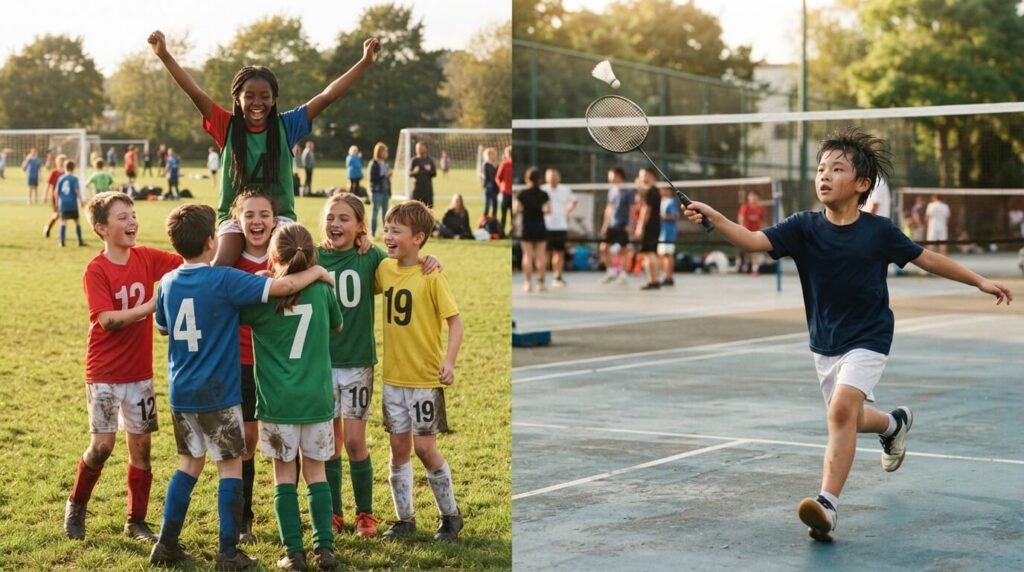
Team sports build collective energy, while individual sports build personal focus both shape a child differently.
What Are Individual Sports?
Individual sports are activities where a single athlete competes alone, relying entirely on their own skill, preparation, and mindset. There’s no teammate to pass the pressure to and no one else to credit for a win. Common individual sports include swimming, tennis, badminton, squash, athletics (track and field), gymnastics, chess (as a competitive sport), martial arts, cycling, and golf.
In Pakistan, badminton, squash, table tennis, and athletics are widely accessible individual sports at the school and club level, and cricket-adjacent skills like batting practice or bowling drills are often trained individually even though the sport itself is team-based.
What Are Team Sports?
Team sports require a group of players working together toward one shared result. Success and failure are distributed across the group, and communication between teammates directly affects the outcome. Cricket, football (soccer), basketball, hockey, volleyball, and rugby are the most popular team sports for children worldwide and in Pakistan, cricket remains by far the most culturally dominant team sport, followed by football and volleyball in schools and local clubs.
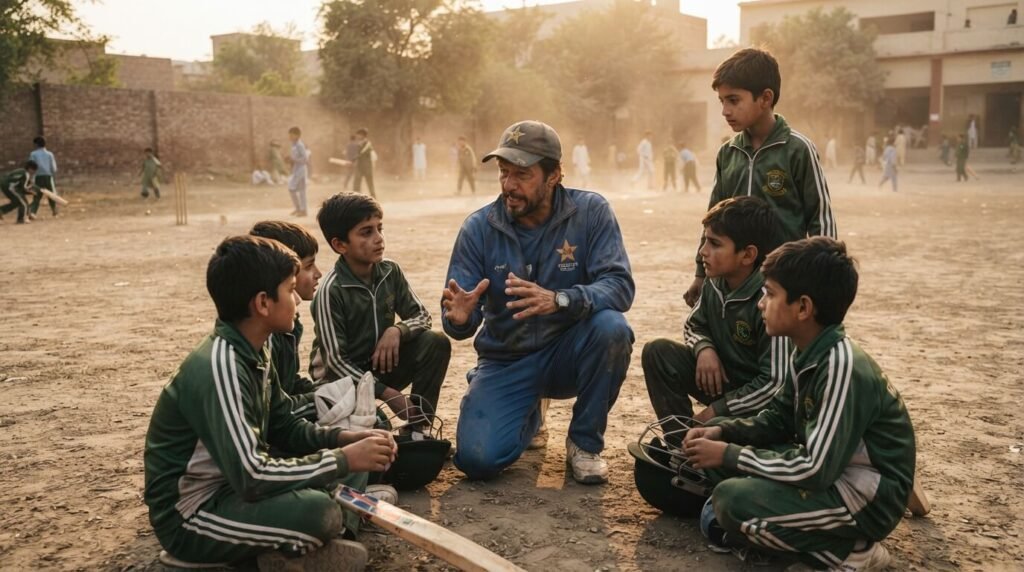
A good coach shapes a child’s team sports experience far more than the sport itself does.
Individual vs Team Sports: Quick Comparison Table
Here’s a side-by-side look at how the two formats differ across the factors parents actually care about:
Factor
Individual Sports
Team Sports
Skill responsibility
100% on the athlete
Shared across the group
Pace of progress
Self-paced, flexible
Tied to team schedule
Social development
Requires deliberate effort
Built into the structure
Leadership exposure
Limited (self-leadership)
Captaincy, role-based leadership
Cost (typical, Pakistan)
Moderate–High (coaching, equipment)
Low–Moderate (shared kit, club fees)
Injury pattern
Overuse/repetitive strain risk
Contact and collision risk
Pressure type
Internal, self-directed
Shared, but public accountability
Best fit for
Self-motivated, independent children
Socially driven, collaborative children
Benefits of Individual Sports for Children
Self-Discipline and Personal Accountability
In individual sports, there’s no one to hide behind. A missed shot in tennis or a slow lap in swimming is entirely the athlete’s to own and that ownership builds a rare kind of accountability early in life. Children learn that consistent, unglamorous practice is what actually moves the needle, not luck or a strong teammate covering for them.
Intrinsic Motivation and Self-Paced Growth
Without a team pulling them along, individually-trained athletes tend to develop stronger intrinsic motivation they learn to set their own goals and chase personal bests rather than group results. This also means a child who starts later doesn’t have to catch up to a whole squad; they can progress at exactly the speed that suits them.
Focus, Precision, and Mental Toughness
Sports like badminton, squash, and athletics demand sustained concentration with no timeout for a teammate to step in. This builds precision and the kind of mental toughness that transfers directly into exam pressure, public speaking, and other solo-performance situations later in life.
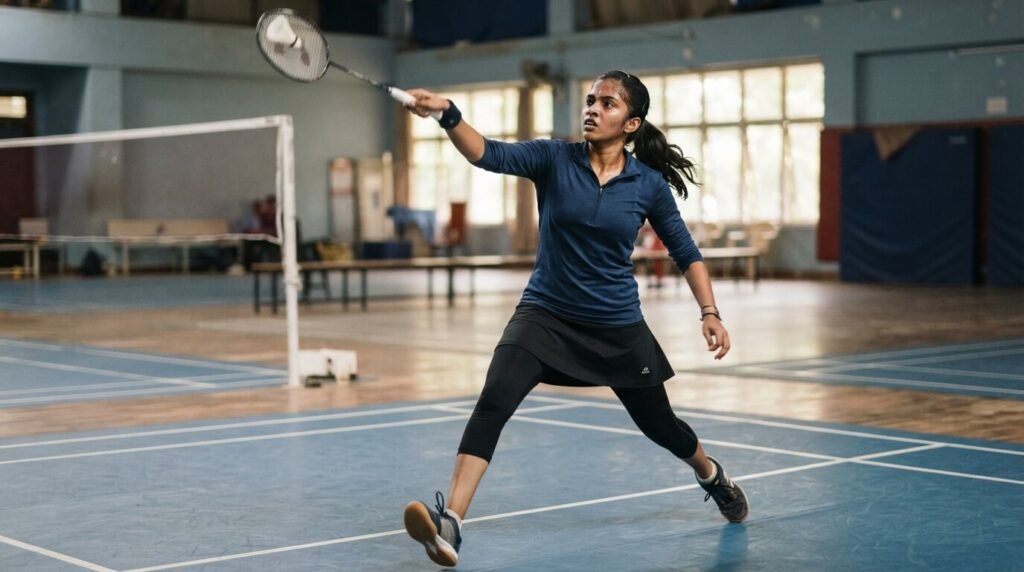
Individual sports like badminton sharpen focus and self-discipline through repetition and self-correction.
Benefits of Team Sports for Children
Communication and Collaboration Skills
Team sports force children to communicate constantly calling for the ball, adjusting to a teammate’s position, or agreeing on strategy mid-game. These are the same collaboration skills that later show up in group projects, workplace teams, and family life.
Leadership and Shared Responsibility
Being part of a team creates natural leadership opportunities that simply don’t exist in solo sports — a captain’s armband, a senior player mentoring a junior, or just being the teammate who calms everyone down after a bad over. Shared responsibility also softens the blow of failure: a loss is distributed across eleven players, not carried by one.
Social Bonding and Sense of Belonging
A 2024 study on youth athletes found that children who played team sports showed stronger executive functioning including better impulse control and working memory than children who played only individual sports, likely because team environments demand constant social processing and quick decision-making under group pressure.
Individual vs Team Sports: Impact on Mental Health and Pressure
This is where the individual vs team sports comparison gets nuanced. Research from Baylor College of Medicine’s Menninger Department of Psychiatry found that individual and team athletes actually share more similarities than differences when it comes to handling pressure but the source of that pressure differs. Individual athletes must recover from a bad performance almost instantly, with no teammate to lean on in the moment, while team athletes carry a more social, public form of accountability.
An earlier study from Iran’s Department of Psychology, surveying 400 athletes, found a measurable difference in psychological skills and motivation: team players used peer support to manage stress more effectively, while individual athletes often had to build coping strategies on their own coping strategies that, once developed, tend to be highly transferable to non-sport situations like exams or job interviews.
Neither pattern is objectively healthier. What matters more is whether the child has a support system coaches, parents, or senior athletes who actively teach emotional regulation rather than just results.
Which Sport Type Fits Your Child’s Personality?
Instead of asking ‘which is better,’ ask ‘which environment brings out my child’s best version of themselves.’ Use this quick checklist:
• Does your child get energized or drained by group activity? Energized → team sports. Drained → individual sports.
• Do they enjoy structured repetition and self-correction, or do they need variety and social feedback to stay motivated?
• How do they currently handle losing do they need company to process it, or space to think it through alone?
• Are they comfortable being watched and judged individually (tennis, gymnastics), or do they prefer the outcome being a group result?
• What’s practically available and affordable near you a strong badminton academy nearby may beat a mediocre football club two suburbs away.
[IMAGE 4: Parent and child discussing sport choice]
AI Image Prompt: A parent sitting with their child at home, looking at a tablet or notebook together discussing sports options, warm indoor lighting, casual home setting, realistic photography, South Asian family, relaxed body language.
The right choice starts with a conversation about personality, not just popularity of the sport.
Can Kids Benefit From Both? The Case for a Blended Approach
Most sports scientists now recommend a multi-sport approach for children, especially before age 12. Playing one team sport and one individual sport across different seasons reduces overuse injury risk, prevents early burnout, and lets a child develop both collaborative and self-reliant skill sets. A child might play cricket with school friends in one season and train in badminton or swimming individually in another getting the camaraderie of one and the personal mastery of the other.
This blended model also protects against the biggest hidden risk of early specialization: children who commit to a single sport too young are statistically more prone to repetitive strain injuries and are more likely to drop out of sport altogether by their teenage years.
How to Help Your Child Choose the Right Sport
Here’s a practical, step-by-step approach for parents, especially useful if you’re comparing local options in Pakistan where school sports periods, club fees, and coaching quality vary widely between cities:
• Step 1: Let them sample 2–3 sports across a season before committing to one long-term.
• Step 2: Talk to the coach about their coaching style praise-based development beats a pure win-at-all-costs approach for young children.
• Step 3: Compare realistic cost and time commitment: kit, coaching fees, travel to matches or tournaments, and weekly hours required.
• Step 4: Watch how your child talks about the sport after practice enthusiasm (even about small wins) is the strongest predictor of long-term commitment.
• Step 5: Revisit the decision every season. A child’s fit with team vs individual sports can genuinely change as their personality develops.
Common Mistakes Parents Make When Choosing a Sport
A few patterns show up again and again in the individual vs team sports decision, and they’re worth avoiding:
• Choosing the sport a parent played, not the sport that fits the child’s current personality.
• Judging a bad week too early one tough practice doesn’t mean the sport (or format) is wrong.
• Ignoring cost sustainability starting an expensive individual sport you can’t fund for more than a season sets a child up for disappointment.
• Over-specializing before age 10–12, increasing both injury risk and burnout risk.
• Assuming team sports automatically build more character than individual sports the coaching and support quality matters more than the sport type itself.
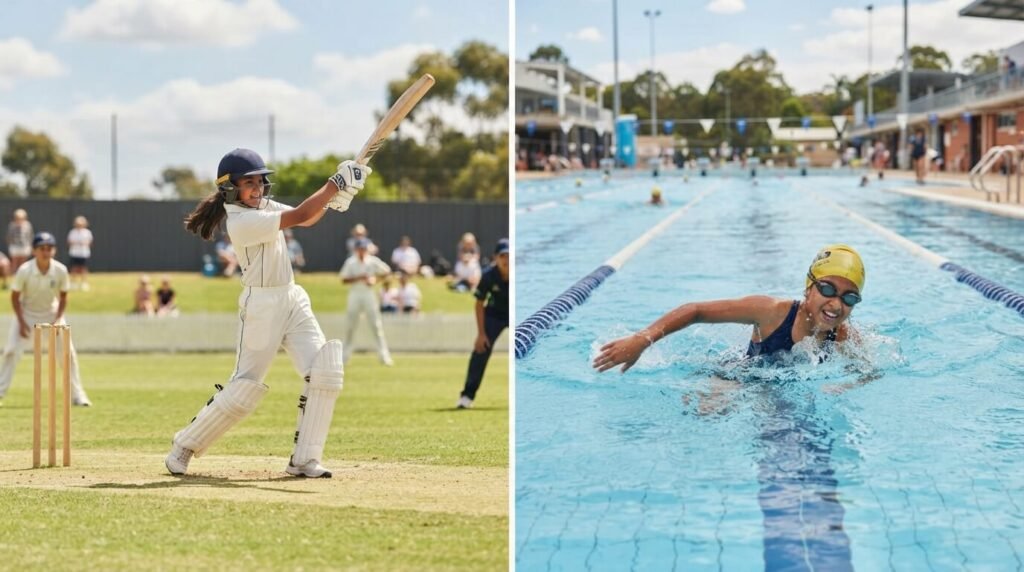
A blended approach one team sport, one individual sport gives children the best of both development paths.
Frequently Asked Questions
Q.Is it better for a child to play a team sport or an individual sport?
Neither is universally better. Team sports build communication, leadership, and shared accountability, while individual sports build self-discipline, focus, and intrinsic motivation. The right choice depends on your child’s personality, not on which format is ‘stronger.’
Q.At what age should a child start choosing between individual and team sports?
Most experts recommend keeping options open and encouraging a multi-sport approach until around age 10–12, rather than specializing early. Before that age, sampling several sports both team and individual helps identify natural fit without locking a child in too soon.
Q.Do individual sports cause more anxiety than team sports?
Not necessarily more anxiety just a different type. Individual athletes face self-directed pressure with less immediate peer support, while team athletes face public, shared accountability. Research shows both groups experience comparable overall pressure levels, just from different sources.
Q.Which is cheaper: individual sports or team sports?
Team sports are usually more cost-effective per child because equipment, coaching fees, and travel costs are shared across the squad. Individual sports like tennis, swimming, or badminton often carry higher per-child coaching and equipment costs, though this varies by club and city.
Q.Can a child play both individual and team sports at the same time?
Yes, and many sports scientists actively recommend it. Playing one team sport and one individual sport across different seasons reduces overuse injury risk, prevents burnout, and builds a more well-rounded skill set than single-sport specialization.
Q.Do team sports build more leadership skills than individual sports?
Team sports offer more built-in leadership roles, such as team captain, but individual sports build a different kind of leadership self-leadership, goal-setting, and personal accountability which is equally valuable, just less visible.
Q.What individual sports are popular for children in Pakistan?
Badminton, squash, table tennis, and athletics (track and field) are among the most accessible individual sports for children in Pakistani schools and local clubs, alongside swimming where facilities are available.
Q.How do I know if my child is better suited to individual or team sports?
Watch how they respond to group settings versus solo tasks, how they handle losing, and whether they seek company or space after a setback. A child who feels energized by group activity usually leans toward team sports, while one who prefers self-paced mastery often thrives in individual sports.
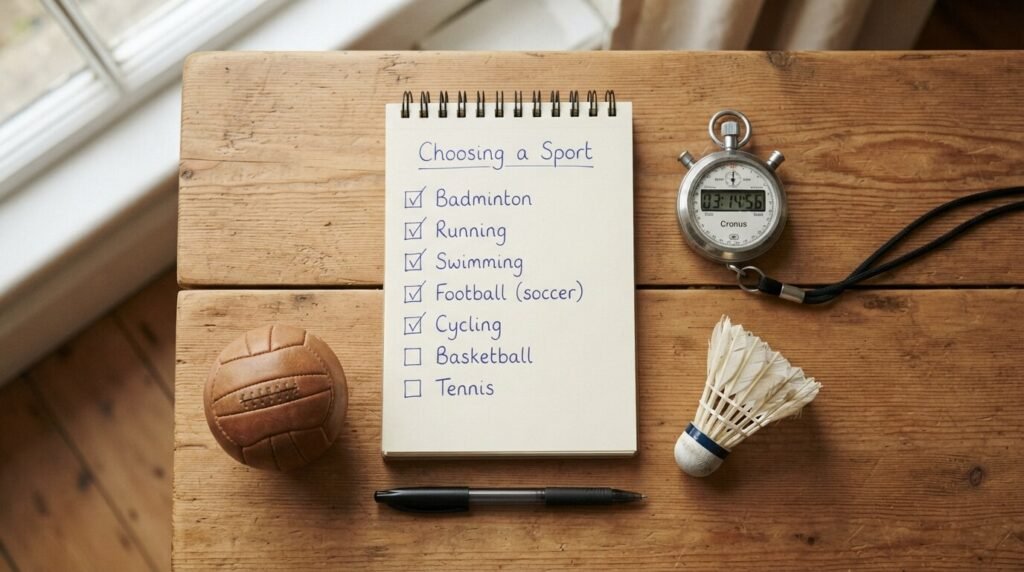
A simple checklist can make the individual vs team sports decision far less overwhelming.
Final Thoughts: There’s No Universal Winner
The individual vs team sports debate isn’t really about which format produces better athletes both produce excellent ones, from Naomi Osaka to a World Cup-winning midfielder. It’s about which environment helps your specific child build confidence, stay motivated, and actually want to come back next week. Let your child sample both, watch how they respond, and don’t be afraid to let the decision evolve as they grow. The best sport, ultimately, is the one they’re excited to play.