Whether you are a parent worried about screen time, a teacher looking for ways to engage your class, or a student wondering which sport to pick up this guide has everything you need. This blog is covered by zainblogs. 10 Benefits of Sports for Students and Good Health not just about running around a field. They shape character, sharpen focus, and build the kind of resilience that textbooks simply cannot teach.
In this guide, we will walk you through the 10 Benefits of Sports for Students and Good Health, their key benefits, how to choose the right one, and how to balance athletics with academics. Let’s dive in.
Why Sports Are Essential for Students
Sports for students build teamwork, fitness, and essential life skills from an early age.
Let’s be honest the modern student’s life is overwhelmingly sedentary. Between long school hours, homework piles, and social media, physical activity often gets pushed to the back burner. But research tells a very different story about what students actually need to thrive.
According to the World Health Organization (WHO), children and adolescents aged 5–17 should get at least 60 minutes of moderate-to-vigorous physical activity every day. Most students fall far short of this target and the consequences are serious.
Here is what the science says about sports for students:
Students who participate in sports have higher graduation rates (source: NCAA Research)
Regular physical activity improves memory, attention, and classroom behavior
Sporting environments teach emotional regulation and conflict resolution
Athletes develop time management skills that serve them for life
Sports reduce rates of anxiety and depression among young people
Simply put, 10 Benefits of Sports for Students and Good Health are not an optional extra they are a core ingredient of a complete education
Top 12 Best Sports for Students (With Full Benefits)
Not all sports suit every student. Below is a carefully researched list of the 10 Benefits of Sports for Students and Good Health covering team sports, individual sports, indoor and outdoor options so every student can find their fit.
1. Football (Soccer) The King of Team Sports
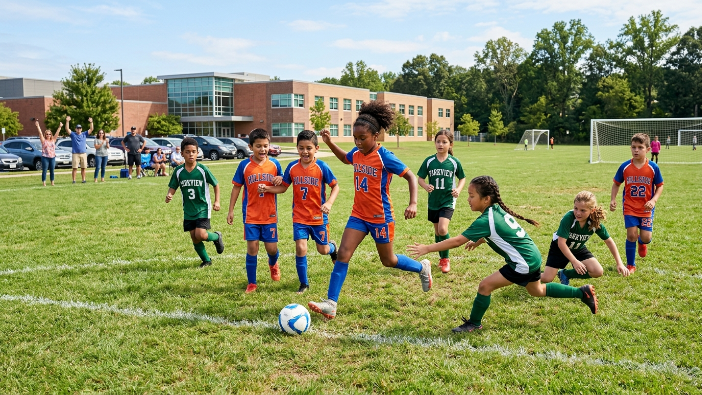
Football remains one of the most popular sports for students worldwide, teaching teamwork and stamina.
Football is played in virtually every school on the planet. It is the ultimate 10 Benefits of Sports for Students and Good Health who want to build endurance, improve social skills, and experience the thrill of team victory.
Physical benefits: cardiovascular endurance, leg strength, coordination, agility
Mental benefits: strategic thinking, quick decision-making under pressure
Social benefits: teamwork, communication, leadership
Accessibility: Very High needs only a ball and an open space
Best for ages: 6 and above
For students interested in competitive football, many schools offer inter-school tournaments through their respective state sports boards.
2. Cricket Patience, Precision, and Team Spirit
Cricket is especially popular across South Asia, the UK, and Australia. As a 10 Benefits of Sports for Students and Good Health, cricket is uniquely valuable because it blends individual skill with team dependency.
Physical benefits: hand-eye coordination, upper body strength, reflexes
Mental benefits: patience, focus, reading the game skills directly applicable to academics
Social benefits: strong camaraderie, role-based teamwork
Best for ages: 8 and above
3. Basketball Fast, Fun, and High-Energy
Basketball is one of the fastest-growing10 Benefits of Sports for Students and Good Health globally. Its fast pace, short game duration, and relatively small playing area make it perfect for schools with limited space.
Mental benefits: spatial awareness, split-second decision making
Why students love it: quick results, visible skill progression, high energy
Best for ages: 8 and above
4. Badminton Accessible Indoor Sport
Badminton is one of the most accessible 10 Benefits of Sports for Students and Good Health in schools. It can be played indoors, requires minimal equipment, and can be enjoyed at any skill level.
Improves reflexes and hand-eye coordination dramatically
Excellent cardiovascular workout disguised as fun
Can be played alone (against a wall) or with 1–3 partners
Best for ages: 6 and above
5. Swimming The Total Body Sport
If your school has pool access, swimming should be at the top of the list. As a 10 Benefits of Sports for Students and Good Health, swimming is arguably the most complete physical exercise available.
Works every major muscle group simultaneously
Zero impact ideal for students with joint issues or injuries
Proven to reduce stress and improve sleep quality
A critical life safety skill not just exercise
Best for: All ages and ability levels
6. Tennis Focus, Discipline, and Precision
Tennis is a 10 Benefits of Sports for Students and Good Health that builds extraordinary mental toughness. Every point is a new game, and the ability to reset after a missed shot directly mirrors academic resilience.
Develops fine motor skills and full-body coordination
Excellent for improving concentration and mental agility
Can be played individually or in doubles flexible social format
Tennis teaches students mental focus and emotional resilience skills that transfer directly to academic life.
7. Athletics (Track & Field) Build the Fundamentals
Track and field might be the oldest organised form of 10 Benefits of Sports for Students and Good Health. Running, jumping, and throwing form the physical foundation that makes students better at every other sport too.
Builds raw cardiovascular capacity and muscular endurance
Individual discipline great for self-motivated students
Events include: sprints, long distance, long jump, high jump, javelin, discus, shot put
8. Volleyball Low Barrier, High Reward
Volleyball is an often-underrated 10 Benefits of Sports for Students and Good Health. It requires no expensive equipment, can be played indoors or outdoors, and teaches explosive teamwork.
Develops shoulder strength, core stability, and jumping ability
Encourages vocal communication players must constantly talk to each other
Best for: Mixed-age groups, school events, large classes
9. Martial Arts Discipline, Respect, and Self-Defense
Whether it is Karate, Taekwondo, Judo, or Wrestling, martial arts offer 10 Benefits of Sports for Students and Good Health that build the inner game as much as the outer one.
Instills deep respect for others and for oneself
Builds focus and the ability to manage anger
Structured belt/grade system keeps students motivated long-term
Extra benefit: self-defence skills build confidence and personal safety
10. Hockey Speed, Skill, and Teamwork
Field hockey and ice hockey both offer exceptional 10 Benefits of Sports for Students and Good Health who want a high-intensity team experience. Field hockey especially is popular in South Asian and European schools.
Exceptional cardiovascular workout
Develops spatial awareness and peripheral vision
Fast-paced maintains engagement even for easily bored students
11. Gymnastics Strength, Flexibility, and Grace
Gymnastics is one of the most comprehensive 10 Benefits of Sports for Students and Good Health at the younger end of the age spectrum. The body control and flexibility developed here benefit every other physical pursuit.
Builds exceptional core strength and body awareness
Improves posture critical for students spending hours at desks
12. Cycling Sustainable, Healthy, and Eco-Friendly
Cycling deserves more recognition as one of the 10 Benefits of Sports for Students and Good Health. It can be both a form of daily transport and a competitive sport.
Low-impact cardio gentle on young joints
Develops independence and spatial navigation skills
Environmentally conscious teaches green habits alongside fitness
Individual Sports vs Team Sports Which Is Better for Students?
This is one of the most common questions around 10 Benefits of Sports for Students and Good Health. The honest answer? Both matter. Here is how they differ:
Factor
Team Sports
Individual Sports
Skill building
Collaborative
Self-reliant
Communication
Essential
Internal/coach
Motivation
Group energy
Self-discipline
Accountability
Shared
Personal
Best develops
EQ & leadership
IQ & focus
The ideal approach for 10 Benefits of Sports for Students and Good Health is a mix of both team sports during school years to build social intelligence, and individual sports to cultivate personal discipline and self-reliance.
How Sports Improve Academic Performance
Parents often worry that 10 Benefits of Sports for Students and Good Health will distract from studying. The research says the opposite is true.
Here is a breakdown of the specific ways 10 Benefits of Sports for Students and Good Health directly improve academic outcomes:
1.Better Brain Function
Physical exercise increases blood flow to the prefrontal cortex the part of the brain responsible for planning, decision-making, and impulse control. Students who play sports literally think better.
2.Improved Memory and Learning
Exercise triggers the release of BDNF (Brain-Derived Neurotrophic Factor) a protein that supports the growth of new neurons. In plain terms: playing 10 Benefits of Sports for Students and Good Health helps them memorise and retain information more effectively.
3.Better Attendance and Behaviour
Student-athletes have statistically lower rates of school absence and classroom disciplinary issues. The structure and goal-orientation of sports carries over naturally into academic life.
4.Time Management Mastery
Students who balance sports and studies are forced to become exceptional time managers. They learn to prioritise, schedule, and execute skills that make them outstanding university students and professionals.
Physical and Mental Health Benefits of Sports for Students
The mental health benefits of sports for students are just as powerful as the physical gains.
Physical Health Benefits
Stronger cardiovascular system: regular sport reduces heart disease risk from an early age
Healthy weight management: active students are significantly less likely to develop childhood obesity
Stronger bones and muscles: weight-bearing sports build bone density during peak growth years
Better sleep: physically active students fall asleep faster and sleep more deeply
Improved immune function: regular moderate exercise strengthens the immune system
Mental Health Benefits
Reduced anxiety and depression: exercise releases endorphins and serotonin natural mood lifters
Boosted self-esteem: mastering a skill in 10 Benefits of Sports for Students and Good Health builds genuine confidence
Stress relief: physical activity provides a healthy outlet for academic and social pressures
Social connection: team sports fight loneliness and build belonging
Resilience building: losing a game and coming back stronger is one of the most important life lessons sports for students can teach
According to Mental Health Foundation UK, regular physical activity is one of the most effective, low-cost mental health interventions available to young people.
How to Choose the Right Sport as a Student
With so many 10 Benefits of Sports for Students and Good Health to choose from, decision paralysis is real. Here is a simple framework:
Step 1 Know Your Personality
Do you prefer working alone or with a team?
Do you enjoy high-intensity bursts or sustained endurance?
Are you competitive or do you play for the joy of movement?
Step 2 Assess Your Physical Strengths
Tall and long-limbed? Consider basketball, volleyball, or swimming
Fast and explosive? Football, sprinting, or badminton
Strong and patient? Cricket, tennis, or martial arts
Flexible and coordinated? Gymnastics, dancing, or martial arts
Step 3 Consider Practicalities
What facilities does your school offer?
What is your budget for equipment?
How much time can you realistically commit each week?
Are there local clubs or coaches available?
Step 4 Try Before You Commit
Many students find their sport by accident. Before settling, try 3–4 different 10 Benefits of Sports for Students and Good Health over a term. Most schools offer taster sessions during PE week or inter-school sports days.
How to Balance Sports and Studies
The number one concern parents and students have about 10 Benefits of Sports for Students and Good Health is whether they can keep up academically. Here are proven strategies:
Use a weekly planner: block out training times and work backwards to schedule study hours
Communicate with teachers: most teachers actively support student-athletes let them know your schedule
Study during travel time: use commuting time to training for revision, reading, or podcasts
Prioritise sleep: student-athletes need 8–10 hours of sleep non-negotiable for both performance and learning
Set academic minimum standards: agree with parents/yourself that grades stay above a certain level if they drop, adjust training load
Batch homework: complete school work in focused blocks rather than grazing across hours
Sports for Students at Different School Levels
Primary School (Ages 5–11)
At this stage, 10 Benefits of Sports for Students and Good Health should emphasise fun, movement, and building basic motor skills. Competitive pressure should be minimal.
Best options: Swimming, gymnastics, athletics, simple team games, yoga
Focus: Enjoyment, coordination, social play
Middle School (Ages 11–14)
This is the ideal window to introduce structured 10 Benefits of Sports for Students and Good Health. Social identity forms here, and being part of a team provides enormous psychological grounding.
Best options: Football, basketball, cricket, tennis, martial arts, volleyball
Focus: Skill development, team belonging, early specialisation
High School (Ages 14–18)
At this stage, 10 Benefits of Sports for Students and Good Health can become genuinely transformative both for personal development and for university applications and scholarships.
Best options: Any sport played competitively at school or club level
Focus: Excellence, leadership (captaincy), mental toughness, performance under pressure
Secondary Topics: Sports Scholarships, Sports Psychology, and More
Sports Scholarships for Students
One of the most tangible rewards of investing in 10 Benefits of Sports for Students and Good Health is the scholarship opportunity. Many universities worldwide offer partial or full sports scholarships to students who demonstrate both athletic excellence and academic discipline.
USA: NCAA Division I and II offer substantial athletic scholarships
UK: Several Russell Group universities offer sports bursaries
India: Khelo India Scheme supports student athletes financially
Elite 10 Benefits of Sports for Students and Good Health increasingly incorporates sports psychology the mental side of performance. Key concepts include:
Visualisation: mentally rehearsing perfect performance before competing
Positive self-talk: replacing ‘I can’t’ with process-focused thinking
Goal setting: SMART goals applied to athletic improvement
Mindfulness: staying present under pressure rather than worrying about outcomes
Bleacher Report stay inspired with sports news and athlete stories
Frequently Asked Questions (FAQ) Sports for Students
Q1: Which sport is best for students who want to improve concentration?
Sports that require sustained focus and quick reflexes are most effective. Tennis, badminton, martial arts, and gymnastics are among the best 10 Benefits of Sports for Students and Good Health looking to sharpen concentration. These activities demand moment-to-moment attention and directly train the kind of focus students need in the classroom.
Q2: Can sports really improve a student’s grades?
Yes and significantly. Multiple peer-reviewed studies confirm that students who participate regularly in sports for students programmes show improved academic performance, better attendance, and higher engagement in class. Exercise enhances neuroplasticity and cognitive function.
Q3: How many hours a week should a student spend on sports?
The WHO recommends at least 60 minutes of moderate-to-vigorous activity daily for children. For structured sports for students, 3–5 training sessions per week of 45–90 minutes each is considered healthy and manageable alongside academic commitments.
Q4: Are individual sports or team sports better for student development?
Both offer unique and complementary benefits. Team sports for students build social intelligence, communication, and collective responsibility. Individual sports build self-discipline, personal accountability, and mental resilience. Ideally, students should experience both at different stages.
Q5: What sports are best for students with limited school facilities?
Many sports for students require minimal infrastructure. Athletics (running outdoors), badminton (a net and shuttlecock), football (any open space), yoga, and martial arts (a cleared indoor space) are all excellent options for resource-constrained schools.
Q6: At what age should a student start specialising in one sport?
Sports science research consistently recommends broad sport for students participation until age 12–14, followed by gradual specialisation. Early specialisation (before age 10) is associated with higher burnout and injury rates. Encourage exploration first.
Q7: How do sports benefit introverted students?
Introverted students often thrive in individual sports for students like swimming, tennis, athletics, or martial arts, which offer structured solo development. Even team sports can benefit introverts by providing social interaction within clear, rule-based frameworks that feel safer than unstructured socialising.
Q8: Can sports help students deal with exam stress?
Absolutely. Exercise is one of the most evidence-backed interventions for stress reduction. Students who maintain sports for students routines during exam season report lower cortisol levels, better sleep quality, and improved mood all of which directly support better exam performance.
Final Thoughts Why Sports for Students Are Non-Negotiable
If there is one message to take from this guide, it is this: sports for students are not a distraction from education they ARE education. The physical literacy, emotional intelligence, resilience, teamwork, and discipline that sport builds are among the most sought-after qualities in universities and workplaces worldwide.
Whether your student is just starting out with a simple game of football in the backyard, or competing at the national level in swimming, the journey through sports for students is one of the most worthwhile investments a school, parent, or student can make.
Pick a sport. Start today. The benefits will last a lifetime.