Have you ever wondered why schools dedicate (9 Reasons Why Sports Are Important in Daily Life) hours every week to physical education, or why doctors keep telling you to stay active? The answer goes far deeper than just losing weight or building muscles. This blog is covered by zainblogs. Understanding the importance of sports in daily life can genuinely transform how you live, think, feel, and connect with people around you.
Whether you’re a student trying to balance studies, a working professional battling stress, or a parent trying to build the right habits in your children this guide is for you. Let’s explore every dimension of why sports are not a luxury but a necessity in modern life.
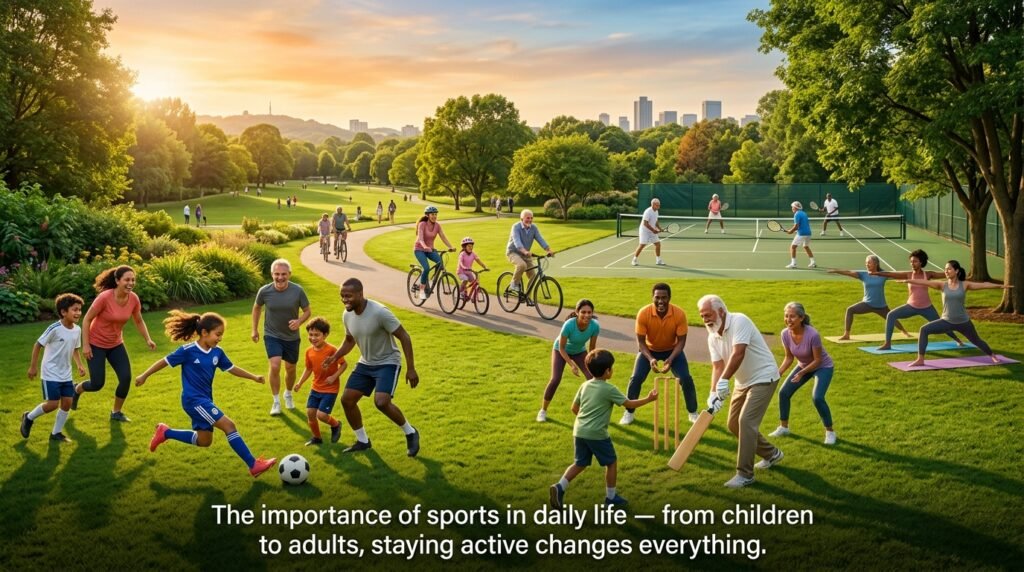
The importance of sports in daily life from children to adults, staying active changes everything.
When most people hear ‘sports,’ they picture professional athletes or weekend tournaments. But the importance of sports in daily life doesn’t require you to compete at the national level. It simply means making some form of structured physical activity running, cycling, swimming, cricket, badminton, football, or even yoga a regular part of your routine.
What Does ‘Sports in Daily Life’ Really Mean?
The World Health Organization (WHO) recommends that adults get at least 150 minutes of moderate-intensity aerobic activity per week. Yet, over 1.4 billion adults worldwide remain insufficiently active. The gap between recommendation and reality is enormous and it’s costing us in health, happiness, and productivity.
1. Physical Health: The Foundation of Everything
The most direct and visible benefit of playing sports is what it does to your body. The importance of sports in daily life starts here because without a healthy body, everything else becomes harder.
Cardiovascular Health
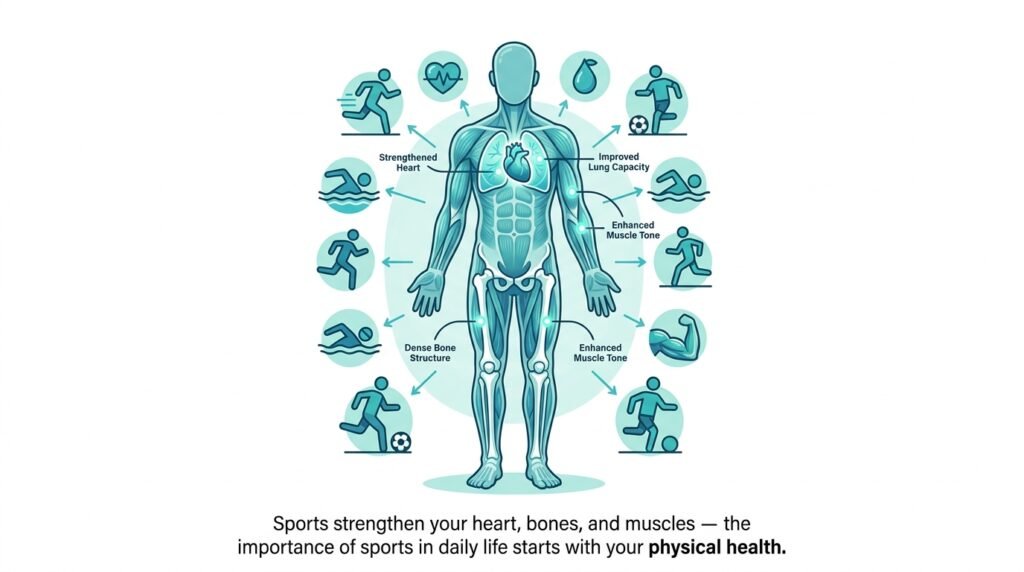
Regular physical activity strengthens the heart muscle, lowers blood pressure, and improves circulation. Sports like running, swimming, football, and cycling are especially effective at reducing the risk of heart disease, the world’s leading cause of death.
Weight Management and Metabolism
Sports increase your resting metabolic rate, meaning you burn more calories even when you’re not exercising. This helps prevent obesity and related conditions like Type 2 diabetes and hypertension.
Bone and Muscle Strength
Weight-bearing sports like basketball, cricket, and athletics build bone density, reducing the risk of osteoporosis later in life. Stronger muscles also improve posture and reduce joint pain.
Reduces risk of cardiovascular disease by up to 35%
Lowers blood sugar levels and improves insulin sensitivity
Builds stronger bones and reduces risk of fractures
Boosts immune function through improved circulation
Improves sleep quality and energy levels throughout the day
Sports strengthen your heart, bones, and muscles the importance of sports in daily life starts with your physical health.
2. Mental Health: The Hidden Superpower of Sports
Here’s something many people don’t realize: the importance of sports in daily life is just as much about your mind as your body. Research published by Harvard Medical School confirms that regular exercise is as effective as antidepressants for mild-to-moderate depression in many cases.
The Neurochemistry of Sports
When you exercise, your brain releases endorphins, dopamine, and serotonin neurochemicals that naturally elevate mood, reduce anxiety, and create a sense of well-being. This is why athletes often describe feeling ‘high’ after a good workout.
Stress Reduction
Physical activity lowers cortisol the body’s primary stress hormone. After a 30-minute game of badminton or a brisk jog, your body literally has less of the chemical that makes you feel overwhelmed. In today’s high-pressure world, this effect is invaluable.
Building MentalResilience
Sports teach you to fail and come back. Whether you miss a crucial penalty or lose a chess match, sports condition your mind to treat setbacks as learning experiences rather than failures. This mental resilience directly transfers to professional and personal life.
Reduces symptoms of depression and anxiety
Improves concentration and cognitive function
Builds emotional regulation and impulse control
Promotes better sleep, which enhances memory and focus
Creates a meditative state during repetitive movements
3. Social Benefits: Sports Build Communities
Humans are social creatures, and the importance of sports in daily life extends powerfully into our relationships and sense of belonging. Sports create shared experiences that bond people across age, background, and culture.
Teamwork and Communication
Team sports like football, volleyball, basketball, and cricket require you to communicate clearly, listen actively, and work toward a shared goal. These are the exact same skills demanded in every workplace, family, and relationship.
Building Friendships and Networks
Sports clubs, gyms, and local teams create natural social environments. People who play sports regularly report having larger, more supportive social networks a powerful buffer against loneliness and isolation, which are growing public health crises.
Cultural Exchange and Unity
Few things transcend cultural and language barriers the way sports do. Cricket unites South Asia, football unites the world, and the Olympic Games remain the planet’s most watched event. The importance of sports in daily life includes its power to build bridges between communities.
Team sports teach communication, cooperation, and build lasting social bonds a key reason for the importance of sports in daily life.
4. Sports and Academic / Career Performance
There’s a persistent myth that sports distract from studies or career. The reality is the exact opposite. Research from the
Journal of Pediatrics and multiple longitudinal studies confirm that students who participate in regular physical activity consistently outperform sedentary peers academically.
Improved Brain Function
Exercise increases blood flow to the prefrontal cortex the part of the brain responsible for decision-making, planning, and focus. Students who play sports process information faster and retain it longer.
Time Management and Discipline
Balancing sports training with school or work builds one of the most valuable professional skills: time management. Athletes learn to be efficient, punctual, and disciplined qualities that employers actively seek.
Leadership and Goal-Setting
Captaining a team, setting personal bests, and pushing through training plateaus all build leadership mindset. Many of the world’s most successful business leaders from Satya Nadella to Imran Khan credit their sports background for their leadership philosophy.
Athletes are 40% more likely to complete college degrees (ESPN Research)
Sports participation correlates with higher GPA and graduation rates
Leadership skills developed in sports directly apply to management roles
Goal-setting habits built through training improve career trajectory
5. The Importance of Sports in Daily Life for Different Age Groups
For Children (Ages 5–14)
The importance of sports in daily life begins from childhood. Children who play sports develop motor skills, spatial awareness, and social confidence. They learn to follow rules, respect authority, and cooperate with peers building the foundation of good character. Outdoor games like cricket, tag, and cycling also reduce screen time and combat the childhood obesity epidemic.
For Teenagers (Ages 15–19)
Adolescence is a period of identity formation and peer pressure. Sports give teenagers a positive identity, a sense of belonging, and healthy outlets for energy and emotion. Participation in sports is strongly correlated with lower rates of drug use, juvenile delinquency, and mental health struggles among teens.
For Adults (Ages 20–45)
Adults face career stress, relationship pressures, and sedentary work environments. The importance of sports in daily life for adults is primarily about stress management, maintaining energy levels, and building social connections outside of work. Even 30 minutes of sports three times a week dramatically improves quality of life.
For Seniors (Ages 60+)
For older adults, sports and physical activity are directly linked to longevity and independence. Low-impact sports like swimming, yoga, walking, and table tennis maintain mobility, cognitive function, and social engagement. Regular activity can delay the onset of dementia and reduce fall-related injuries.
The importance of sports in daily life applies to every age from childhood to senior years.
6. Sports Build Character and Life Values
Beyond health and performance, the deeper importance of sports in daily life lies in the values they instill. Sports are one of the most effective character development tools humans have ever created.
Discipline: Training schedules teach consistency and commitment
Resilience: Losses and injuries teach you to bounce back stronger
Fairness: Following rules and respecting opponents builds ethical thinking
Humility: Winning gracefully and losing with dignity are life skills
Persistence: Working toward long-term improvement builds patience and grit
Respect: For coaches, teammates, opponents, and officials
These aren’t just sports values they’re the values that build great humans. Every parent, teacher, and mentor should understand the importance of sports in daily life as a tool for raising better people.
7. How to Make Sports a Part of Your Daily Life
Knowing the importance of sports in daily life is only valuable if you act on it. Here’s a practical, beginner-friendly roadmap to get started:
Step 1: Choose a Sport You Actually Enjoy
The best sport is the one you’ll stick to. Don’t force yourself into a gym if you hate it. Try badminton, cricket, cycling, swimming, or even dance. Enjoyment is the most powerful motivator.
Step 2: Start Small, Build Gradually
Begin with 20–30 minutes, three times a week. Don’t aim for perfection on day one. Consistency over weeks and months matters far more than intensity on day one.
Step 3: Find a Partner or Join a Club
Social accountability dramatically increases adherence. Join a local cricket club, a gym class, or find a running buddy. The social element reinforces the habit.
Step 4: Integrate Movement Into Your Routine
Walk or cycle to work instead of driving
Take stairs instead of lifts
Play with your children in the evening
Join an office sports team or lunch-hour walking group
Schedule sports time in your calendar like a work meeting
Step 5: Track Progress and Celebrate Milestones
Use a fitness app like Strava or simply a notebook to track your activity. Celebrating small wins a first 5K run, a new personal best keeps motivation high.
Starting is the hardest part small consistent steps unlock the full importance of sports in daily life.
8. Challenges That Stop People from Playing Sports (And How to Overcome Them)
Despite understanding the importance of sports in daily life, many people struggle to make it a consistent habit. Let’s address the most common barriers honestly:
‘I Don’t Have Time’
Research shows that people who exercise regularly are actually more productive during working hours. A 30-minute morning jog can save you hours of sluggish, unfocused work time. It’s an investment, not a cost.
‘I’m Too Tired After Work’
Counterintuitively, physical activity increases energy levels. The first two weeks feel hard, but after that, most people report significantly higher energy. Start with a 15-minute evening walk if that’s all you can manage.
‘I Can’t Afford Gym Fees’
Sports don’t require expensive equipment. Cricket, football, running, cycling, yoga, and bodyweight exercises cost next to nothing. Public parks, school grounds, and community spaces are free to use.
‘I’m Not Athletic’
You don’t need to be talented to benefit from sports. The importance of sports in daily life isn’t about winning it’s about participating. There is a sport or physical activity for every body type, fitness level, and age.
9. The Bigger Picture: Sports and Society
The importance of sports in daily life isn’t just individual it’s societal. Countries with high rates of physical activity have lower healthcare costs, higher workforce productivity, and stronger social cohesion. Sports also reduce crime rates in communities by giving young people positive identity, structure, and belonging.
In Pakistan and across South Asia, sports like cricket, kabaddi, squash, and hockey are deeply woven into cultural identity. Pakistan Super League (PSL) and grassroots sporting programs show how sports can unite communities, inspire youth, and project national pride.
Governments, schools, NGOs, and families all have a role to play in making the importance of sports in daily life not just understood but lived.
Sports unite communities, cultures, and nations a powerful dimension of the importance of sports in daily life.
Frequently Asked Questions (FAQ)
Q1. Why is the importance of sports in daily life so emphasized by doctors and educators?
Because sports simultaneously improve physical health, mental well-being, social skills, and academic or career performance. No other single activity delivers benefits across all four dimensions of human wellness. Doctors recommend it to prevent chronic disease; educators recommend it to boost learning outcomes; psychologists recommend it to manage anxiety and depression.
Q2. How much time should I spend on sports every day to see real benefits?
According to WHO physical activity guidelines, adults should aim for at least 150–300 minutes of moderate-intensity activity per week (about 30 minutes per day on most days). Even 20 minutes of vigorous activity three times a week produces measurable health improvements.
Q3. Can sports really improve mental health, or is that exaggerated?
It’s not exaggerated it’s science. Multiple peer-reviewed studies, including meta-analyses from Harvard and Oxford, confirm that regular physical activity reduces symptoms of depression and anxiety by 20–30%. The neurochemical release during exercise (endorphins, serotonin, dopamine) is real and measurable. The importance of sports in daily life for mental health is now widely accepted in clinical psychology.
Q4. What are the best sports for beginners with no athletic background?
Walking, cycling, swimming, badminton, and yoga are excellent starting points. They are low-impact, low-cost, and easy to learn. As fitness improves, beginners can progress to more demanding sports like football, tennis, or martial arts.
Q5. How do sports help students perform better academically?
Exercise increases blood flow to the prefrontal cortex, improving focus, memory retention, and processing speed. Students who play sports also develop discipline, time management, and goal-setting skills that directly improve their academic habits and outcomes.
Q6. Is playing sports alone as beneficial as playing with a team?
Both have value. Solo sports like running, swimming, and cycling deliver excellent physical and mental benefits. Team sports add the dimension of social connection, communication, and teamwork. Ideally, combine both a team sport for social benefits and an individual activity for personal development.
Q7. At what age should children start playing sports?
Children can start basic physical play from infancy. Structured sports are appropriate from age 5–6 for simple games, and competitive sports from around 8–10. The key is making it fun rather than pressuring young children for results. Lifelong habits are built through positive early experiences.
Q8. Can sports help manage chronic conditions like diabetes or hypertension?
Yes and this is one of the most critical dimensions of the importance of sports in daily life. Regular physical activity improves insulin sensitivity (helping manage Type 2 diabetes), lowers blood pressure naturally (reducing need for medication in many cases), and reduces LDL cholesterol. Always consult your doctor before starting a new exercise regimen if you have existing health conditions.
Final Thoughts: Start Today, Not Tomorrow
The importance of sports in daily life is not a motivational slogan it’s a well-documented, scientifically proven, universally experienced truth. From the child running on a school ground to the senior swimming laps at the community pool, sports build healthier bodies, sharper minds, stronger communities, and better people.
You don’t need to be an Olympian. You don’t need expensive equipment. You don’t need to wait until Monday or January 1st. You need 20 minutes today, and the willingness to make those 20 minutes a habit.
Because the version of you that plays sports regularly feels better, performs better, connects better, and lives better. That’s the importance of sports in daily life, in its simplest and most powerful form.